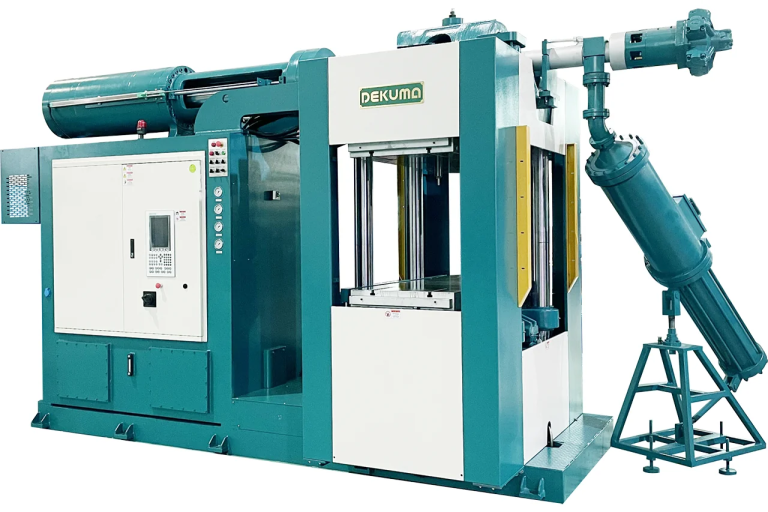
Rubber molding converts a variable compound into parts expected to meet stable dimensions and performance requirements. Small changes in temperature, viscosity, feeding, injection, venting, pressure holding, or cure can alter the result. A rubber injection molding machine must therefore control a process window rather than repeat nominal movements alone.
The value of rubber processing machinery is found in its ability to keep material, mold, and machine conditions aligned across shifts and batches. Stable production reduces scrap and troubleshooting time, but it also improves planning because cycle time and usable output become more predictable.
Material preparation sets the starting condition
Natural rubber, NBR, EPDM, silicone, TPV, and TPE respond differently to heat, shear, pressure, and time. Storage and preparation influence the compound before it reaches the machine. Batch identification, temperature, preforming, and feeding procedures should consequently be part of the controlled production method.
Dekuma provides vertical, horizontal, C-frame, and dedicated platforms for different materials and products. Relevant configurations use optimized plasticizing, separate thermal zones, FIFO paths, synchronized dosing, or direct feeding according to the intended application.
Consistent plasticizing helps establish repeatable flow and shot behavior. Poor homogenization or trapped air can create defects that later appear to be mold or clamping problems. Process engineers should evaluate material preparation together with part weight, filling pattern, and cure results.
Changeovers deserve specific rules. Residual compound, incorrect temperatures, or an unverified recipe can contaminate the next run. Cleaning methods and release criteria should be documented so production does not resume solely because the machine appears visually empty.
Injection and clamping must remain coordinated
Within a stable cell, rubber processing machinery controls injection pressure, speed, volume, and switching points while the clamping system resists cavity force. These functions must be matched to mold area, runner design, compound viscosity, and venting rather than adjusted independently.
Closed-loop sensors can compare commanded and actual pressure or position. This information supports repeatability, but calibration and maintenance determine whether the readings remain trustworthy. Trend review can reveal overshoot, slow response, or position drift before part quality falls outside limits.
Mold protection should use controlled low-pressure movement before full clamping. Inserts, profiles, or residual parts can otherwise damage tooling. Position confirmation and interlocks are especially important in automated cells where an operator does not inspect every cavity before closing.
Even clamping and platen alignment affect flash, thickness, and mold wear. A higher force setting is not a substitute for correct setup. Excess force can increase stress and energy demand, while insufficient force may allow the mold to open during injection.
Temperature and cure determine final properties
A rubber injection molding machine controls barrel and mold temperatures across different stages. The compound must remain processable before injection and then receive sufficient heat for vulcanization. Sensors, heaters, circulation, insulation, and contact surfaces should be checked for uniformity, not just average value.
Cure time should be validated against part thickness, compound, mold temperature, and required properties. A shorter cycle may raise output but leave undercured areas. Excessive time consumes capacity and energy without necessarily improving quality, making controlled trials essential.
Pressure holding during long cures requires stable hydraulics or mechanical locking. Energy-saving arrangements may reduce unnecessary pump operation while preserving force. Their effect should be measured over equivalent cycles, including heating, auxiliaries, standby, and changeovers.
Recipe management protects approved settings. Access levels and revision history help prevent casual changes, while production records connect the active recipe with material lot, mold, cavity, and inspection outcome. This linkage makes root-cause analysis more efficient.
Maintenance preserves the validated window
Heating, transmission, hydraulic, injection, clamping, and safety systems all influence process stability. Preventive work should use operating hours, cycle count, trend data, and component condition. Cleaning, lubrication, filtration, calibration, and timely replacement of wear items protect repeatable behavior.
Dekuma’s application-specific platforms illustrate why a stable process cannot be separated from machine selection. The relevant evidence is not a generic accuracy claim, but repeatable pressure, temperature, position, cure, and part results under the proposed material and mold conditions.
Alarm patterns and energy use can provide early maintenance evidence. Repeated minor stops may indicate a sensor, handling, or alignment issue. A gradual rise in pressure demand or heating time may signal contamination, leakage, insulation loss, or a changed process load.
Stable rubber processing machinery allows factories to distinguish normal variation from developing faults. When material controls, machine feedback, mold condition, recipes, inspection, and maintenance are connected, production teams can correct causes systematically instead of relying on repeated trial-and-error adjustments.
Measurement-system capability also influences apparent stability. Gauges, inspection fixtures, sampling methods, and operator technique should be verified so reported variation reflects the product rather than the measurement process. Cavity-level and time-based samples can reveal patterns that a pooled average conceals.
Production planning should use accepted output instead of theoretical cycles. Warm-up, material preparation, changeovers, cleaning, inspection, and minor stops consume available time. Recording these losses helps engineering distinguish machine limitations from organizational constraints and directs improvement toward the largest verified source.
A stable baseline should be reviewed after planned maintenance to confirm that pressure response, temperature uniformity, alignment, and safety functions have returned to their approved condition.