Selecting an execution platform forms the foundational milestone for high-reliability embedded system architectures. Engineering directors constantly navigate the trade-off between deterministic single-chip processing and customizable parallel logic fabrics. Choosing an unsuitable control topology inflates development budgets, lengthens layout cycles, and complicates long-term board manufacturing.
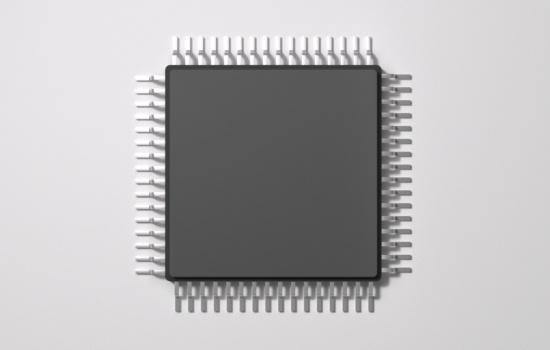
Deploying the STM32F405RGT6 High-performance 32-bit Microcontroller (MCU) equips embedded designers with a battle-tested Arm Cortex-M4 architecture clocking up to 168 MHz. Integrated floating-point arithmetic and single-cycle DSP instructions resolve demanding real-time control algorithms. Standardizing on this monolithic device simplifies PCB routing while meeting tight power constraints.
System architectures demanding massive signal pipelining, multi-channel sensor aggregation, or custom physical-layer bridging compel teams to evaluate reconfigurable logic. Unlike microcontrollers that sequence operations sequentially through register files, logic gates process streaming data simultaneously. Resolving this engineering choice requires analyzing silicon topologies, peripheral overhead, firmware turnaround, and global sourcing realities.
Execution Topologies: Pipelined Cores versus Spatial Logic
Sequential instruction handling represents the operational bedrock of standard embedded processors. STMicroelectronics integrates its proprietary Adaptive Real-Time ART Accelerator into silicon, delivering zero-wait-state code execution from 1 Mbyte flash at top core speeds. Internal bus matrices route concurrent data transactions efficiently between peripherals, SRAM blocks, and computing registers.
High-bandwidth streaming tasks quickly challenge serial execution boundaries. Heavy mathematical workloads like high-order finite impulse response filtering, beamforming, and multi-axis motor commutation generate intensive interrupt overhead on single cores. Real-time control loops suffer when processor cycles become bottlenecked by shared arithmetic registers or interrupt stacking latency.
Programmable logic resolves processing bottlenecks by distributing look-up tables, flip-flops, and dedicated multiplier blocks across configurable logic arrays. Hardware description languages configure physical hardware paths that execute calculations concurrently without instruction decode overhead. Dedicated logic circuits handle high-speed data streams deterministically without stealing compute cycles from supervisory system tasks.
Cost Dynamics and Hardware Overhead Across Programmable Platforms
Commercial dynamics across the fpga market highlight distinct bill-of-materials realities for original equipment manufacturers. Devices produced by AMD, Altera, Lattice, and Microchip deliver unmatched hardware flexibility, yet bare silicon costs represent only part of total system expenses. Peripheral circuitry drives overall production budgets significantly higher.
Ancillary hardware demands expand board complexity considerably when implementing programmable logic. Reconfigurable arrays require multi-rail power converters, sequenced voltage monitoring, external boot configuration memory, and complex multi-layer printed circuit boards. Microcontrollers integrate internal regulators, non-volatile storage, and oscillator circuitry directly onto silicon, minimizing external passive counts.
Software tool licensing further skews the comparative financial ledger. Embedded microcontroller development benefits from open-source toolchains, low-cost debug probes, and established royalty-free libraries. Conversely, high-capacity logic platforms mandate substantial expenditures for proprietary electronic design automation software seats, synthesis suites, and proprietary intellectual property blocks.
Mixed-Signal Integration and Board Space Optimization
Board space constraints make monolithic integration vital for modern industrial electronics. Housed in a standardized 10-by-10-millimeter LQFP-64 package, the STM32F405RGT6 High-performance 32-bit Microcontroller (MCU) combines 192 Kbytes of internal SRAM with multiple communications interfaces, including dual CAN 2.0B controllers, dual USB OTG ports, and three high-speed SPI channels.
Mixed-signal capabilities deliver decisive advantages for compact designs requiring sensor data acquisition. Three on-chip 12-bit analog-to-digital converters achieve up to 7.2 MSPS interleaved sampling rates, supported by dual 12-bit digital-to-analog converters. Programmable logic typically lacks integrated precision analog stages, requiring discrete converter chips that consume precious board space.
Dedicated hardware timers eliminate software overhead during motion control and power conversion. Seventeen internal timers include advanced pulse-width modulation modules engineered specifically for motor drives and inverter stages. These autonomous peripherals interact directly with memory through direct memory access channels, generating jitter-free switching signals without interrupting core processing.
Firmware Development Velocity and Maintenance Lifecycles
Writing code in standardized C or C++ enables development teams to deliver products rapidly to market. Engineers leverage mature operating systems, open-source networking stacks, and standard peripheral drivers to construct robust application firmware. Reusing modular code libraries drastically compresses prototyping phases compared to writing register-transfer-level hardware descriptions.
Maintaining deployed equipment over multi-year lifecycles also favors structured microcontroller firmware. Applying algorithmic adjustments, security patches, or functional enhancements involves straightforward in-field updates through onboard bootloaders or network connections. Modifying programmable logic requires synthesizing new bitstreams, closing timing constraints, and conducting extensive regression verification across environmental temperature ranges.
Component Traceability, Sourcing Integrity, and Procurement
Managing semiconductor distribution channels requires proactive supplier partnerships capable of handling lead-time fluctuations and factory allocation shifts. Unibetter distributes a wide range of electronic components across both microcontroller and programmable logic segments, helping production managers maintain smooth assembly schedules through unpredictable market cycles.
Guaranteeing component authenticity demands strict traceability controls across international procurement networks. Unibetter sources and procures electronic components from franchised sources to guarantee 100% authentic, quality-assured and brand-new electronic components. Rigorous inspection protocols, optical verification, and lot code audits shield production lines from counterfeit risks.
Market volatility throughout the global fpga market illustrates why procurement specialists value proactive inventory intelligence. Unibetter centers its service strength on supporting customers to locate needed electronic components and acquire them at lower costs, enabling original equipment manufacturers to protect gross margins while maintaining steady assembly throughput.
Architectural Selection Framework for Scalable Deployments
Balancing computational throughput against lifetime lifecycle expense defines successful embedded design. Programmable logic arrays excel in specialized workloads characterized by severe signal concurrency, extreme I/O port counts, and custom communication protocols. Standard microcontrollers deliver superior value for assemblies needing rich analog peripherals, streamlined PCB routing, and rapid firmware implementation.
Deciding between these architectures ultimately depends on whether end-product differentiation stems from customized hardware fabrics or responsive real-time firmware execution. When compact footprints, simplified power routing, reliable procurement channels, and predictable unit costs dominate project priorities, mature Cortex-M4 microcontrollers remain the definitive engineering choice for commercial deployments.