Interior lighting has a considerable influence on how people perceive and use a space. Beyond providing sufficient visibility, it shapes the atmosphere, emphasizes architectural details, and supports activities ranging from focused work to relaxation. Modern interiors increasingly combine different lighting layers instead of relying on a single ceiling fixture to illuminate an entire room.
This approach gives designers greater freedom to incorporate custom light fixtures that respond to specific spatial requirements. For industrial facilities, commercial interiors, and contemporary buildings, LEDIA Lighting offers a manufacturing perspective on how adaptable lighting can address different installation conditions and functional expectations.
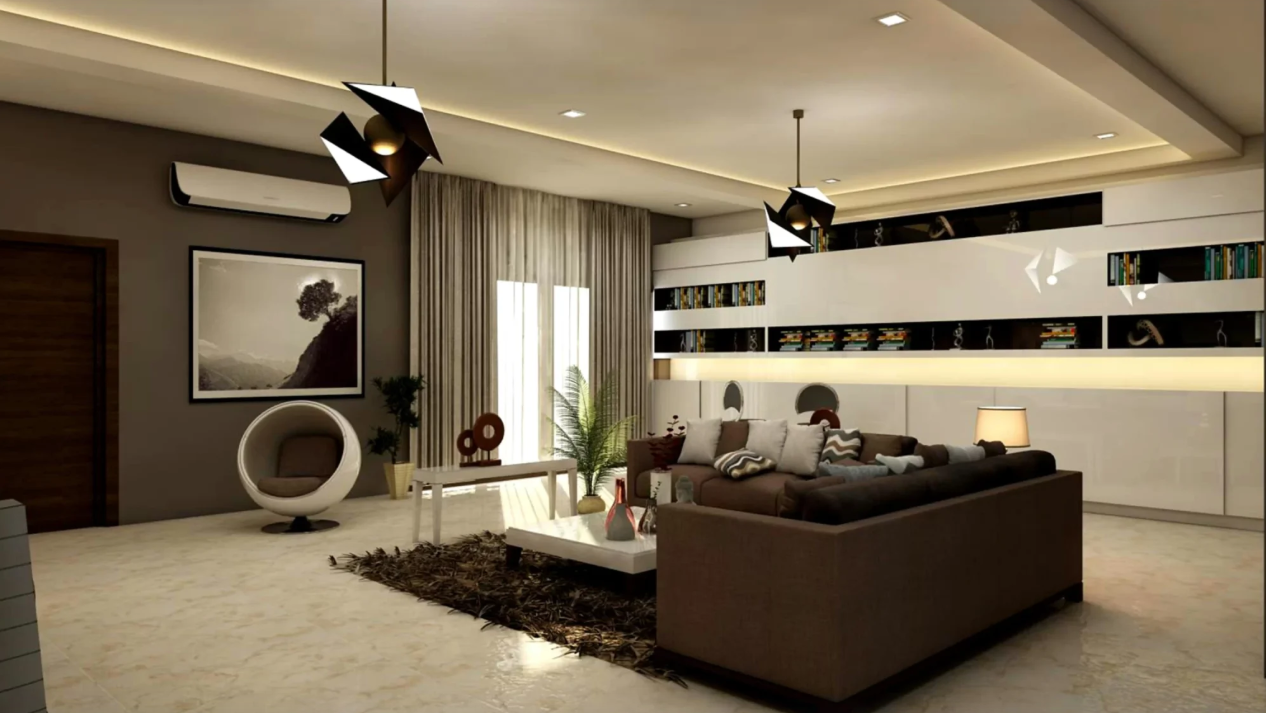
Understanding the Role of Customized Lighting in Interior Design
Every interior has its own combination of dimensions, ceiling heights, surface materials, and functional requirements. A narrow corridor, for instance, benefits from a different lighting arrangement than a large open-plan office. Standard fixtures may provide sufficient illumination in straightforward layouts, but unusual ceiling structures or architectural details can require adjustments to fixture dimensions, mounting methods, or light distribution. Customization gives designers more control over these variables without treating every room as an identical installation.
Visual consistency is another important consideration. In commercial environments, lighting often needs to complement furniture, signage, display structures, and the overall interior concept. Linear illumination can emphasize ceiling edges or create a continuous visual element along walls and counters. Recessed installations offer a relatively discreet appearance, while suspended fixtures can become recognizable architectural features. The final arrangement should reflect the character of the interior rather than introduce unnecessary visual complexity.
Functional requirements also influence the degree of customization needed. Offices generally require comfortable illumination for reading and computer-based tasks, while retail spaces may need additional accent lighting to distinguish merchandise. Workshops and manufacturing facilities place greater emphasis on visibility, durability, and operational reliability. Custom LED lighting solutions can accommodate these different priorities through adjustments to optical characteristics, electrical configurations, protection levels, and installation accessories.
Balancing Light Distribution, Color, and Visual Comfort
Light distribution determines how effectively illumination reaches the surfaces and activities within a room. A fixture with a narrow beam may create concentrated brightness in one area while leaving surrounding surfaces relatively dim. Wider distributions can provide more general coverage, although their suitability depends on mounting height, room dimensions, and fixture spacing. Lighting designers often use photometric data, including intensity distribution curves, to predict how a proposed arrangement will perform before installation.
Color temperature influences the atmosphere of an interior. Measured in Kelvin, correlated color temperature (CCT) describes the perceived warmth or coolness of white light. Warm white illumination, commonly around 2700K–3000K, is frequently associated with hospitality and residential settings. Neutral white options around 3500K–4000K are often considered for offices and commercial environments, while cooler lighting may suit certain industrial applications. The appropriate value depends on the intended use, surrounding finishes, and visual preferences.
Color rendering deserves equal attention in spaces where accurate color perception matters. The color rendering index (CRI) indicates how closely a light source reproduces object colors compared with a reference illuminant. Higher CRI values can be particularly useful in clothing stores, product displays, design studios, and inspection areas. Glare control should also be considered, since excessive brightness within the field of view can cause discomfort even when average illuminance levels appear adequate. Diffusers, shielding, fixture positioning, and suitable optics all contribute to visual comfort.
Selecting Materials and Configurations for Different Environments
Fixture materials influence appearance, heat management, weight, and resistance to environmental conditions. Aluminum is widely used in lighting housings and profiles because it is lightweight and conducts heat effectively. Polycarbonate and other suitable polymers may be incorporated into diffusers or protective covers, depending on optical and mechanical requirements. In humid or dusty environments, enclosure design and sealing methods become especially important because moisture and particles can affect internal electrical components.
Industrial interiors introduce additional demands that are not always present in conventional offices or residential spaces. Production areas may contain machinery, airborne dust, vibration, temperature variations, or regular cleaning procedures. Fixtures installed in these locations need to be assessed against the actual operating environment, including their ingress protection ratings, mounting stability, thermal characteristics, and maintenance accessibility. Specifications should be based on documented conditions rather than assumptions.
For manufacturers and project buyers, LEDIA Lighting provides industrial lighting customization and reports that its products serve factories, production areas, and other demanding environments. Its industrial lighting offering includes custom LED light strips designed around stable operation, reduced maintenance requirements, and extended service life. Its reported manufacturing infrastructure includes more than 20 LED strip production lines and approximately 1.5 million meters of monthly strip production capacity.
Conclusion
Interior lighting design becomes more adaptable when fixture dimensions, optical performance, materials, and installation methods are considered together. A visually attractive arrangement still needs to satisfy the practical demands of its environment, whether that means comfortable illumination in an office or dependable operation in a manufacturing facility.
Well-developed custom light fixtures allow architectural intentions and functional requirements to coexist without relying on identical specifications for every space. Through its industrial manufacturing capabilities and customized product offerings, LEDIA Lighting participates in this broader approach to lighting design. Careful specification and early project coordination can help buyers develop custom LED lighting solutions that remain appropriate throughout the intended operating life of an interior.